Complete Coffee Beans Guide – Choose, Store, Brew
Introduction:
Your morning coffee tastes sour or bitter even after changing brands. That happens because you never learned how to evaluate coffee beans properly. You grind, pour, and hope. The result stays mediocre. The missing link is understanding what makes coffee beans fresh, how roasting changes them, and which brewing method fits your taste. This guide removes guesswork. Follow these steps from farm to cup, and you will brew the best coffee of your life starting tomorrow.
What Exactly Are Coffee Beans? The True Story
Most people believe coffee beans grow as brown, hard nuggets on trees. Wrong. Coffee beans are actually seeds hidden inside red or purple coffee cherries. Farmers pick ripe cherries by hand. Then they remove the fruit pulp through wet or dry processing. What remains is a green, dense seed called green coffee. That green seed holds no coffee flavor yet. Only applying intense heat – roasting – transforms it into the aromatic, brown coffee beans you recognize.
A single coffee cherry usually contains two seeds facing each other. Sometimes only one seed develops, called a peaberry. Peaberries roast more evenly and some roasters sell them separately. Understanding this origin helps you appreciate why coffee beans from different farms taste so distinct.
The Two Main Species: Arabica and Robusta
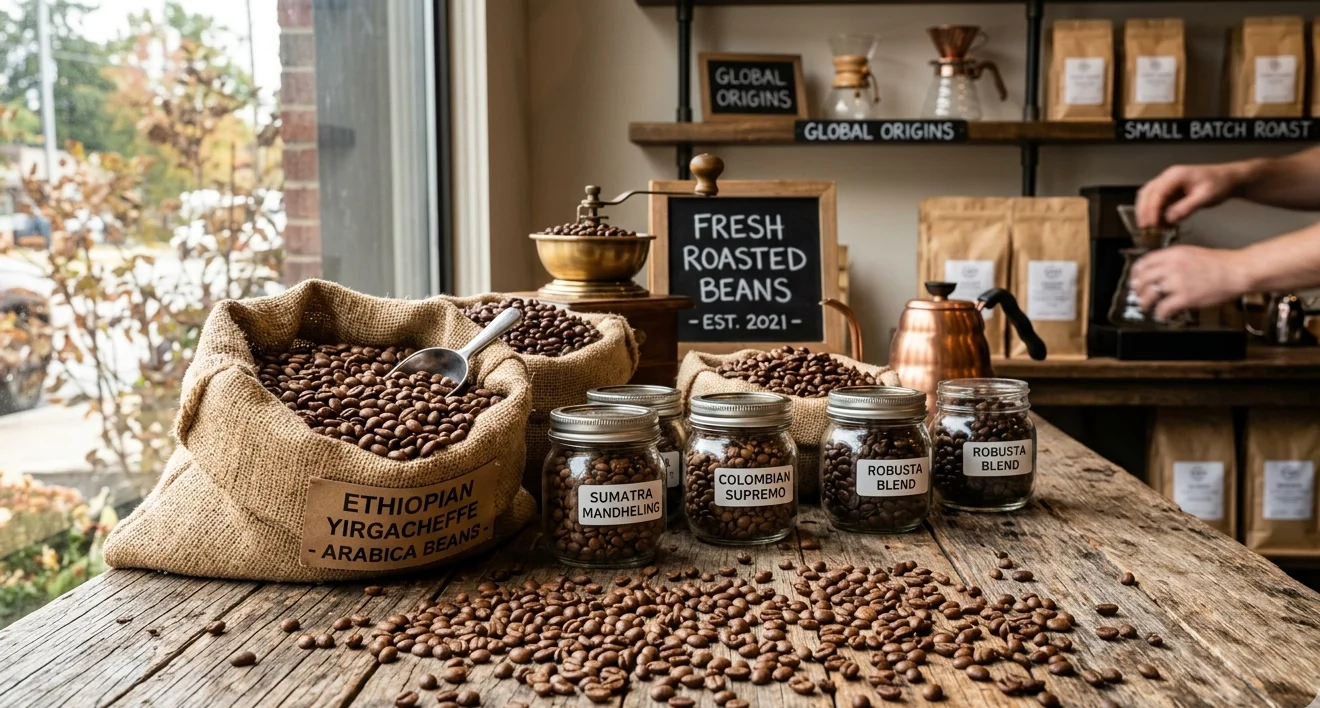
Walk into any specialty cafe. They sell only arabica coffee beans. Walk into a supermarket. You see both arabica and robusta. The difference starts with growing conditions. Arabica grows best at high altitudes between 600 and 2,200 meters. Cool temperatures slow cherry ripening, allowing more sugar development. That gives arabica coffee beans bright acidity, complex fruit notes, and a clean finish.
Robusta grows at low elevations from sea level to 800 meters. It withstands heat, pests, and drought easily. Robusta coffee beans contain nearly twice the caffeine of arabica. Caffeine acts as natural pest protection. The taste profile is earthy, grainy, and sometimes rubbery. Many commercial espresso blends add 10–20% robusta to boost crema thickness and caffeine kick. But 100% arabica remains the gold standard for single-origin coffee beans.
Single Origin vs Blends: Which One Suits Your Morning Routine?
Single origin coffee beans come from one country, one region, or even one single farm. They tell a pure story of that place’s soil, rainfall, and processing method. An Ethiopian Yirgacheffe tastes like jasmine and lemon. A Colombian Huila offers caramel and red apple. A Costa Rican Tarrazú gives bright orange and honey. These coffee beans change with seasons and harvests. That is exciting for explorers.
Blends combine coffee beans from two or more origins. Roasters design blends for consistency. A breakfast blend stays the same bag after bag. An espresso blend balances body, sweetness, and crema year round. Blends are forgiving and reliable. Neither choice is better. Pick single origin coffee beans when you want adventure. Pick blends when you want predictable comfort. Many coffee lovers keep both at home.
How Roasting Transforms Green Coffee Beans Into Aromatic Jewels
Green coffee beans smell like grass and hay. Roasting changes everything. Heat triggers the Maillard reaction and caramelization. Sugars break down. Acids transform. Oils migrate to the surface. Within 8 to 15 minutes, the beans double in size, lose 15–20% of their weight, and develop over 800 aromatic compounds.
Light roasts end right after first crack. The beans are tan to light brown. No oil on the surface. Light roasted coffee beans taste fruity, floral, and tea-like. Medium roasts go further, balancing sweetness and acidity. This is the most popular roast level in North America. Dark roasts reach second crack or beyond. Oils appear. Flavors become smoky, bold, and sometimes bitter. Dark roasted coffee beans lose most origin character but gain heavy body. Each roast level works for different brewing methods. Experiment to find your match.
The Freshness Clock: Why Whole Coffee Beans Beat Pre-Ground Every Time
Roasted coffee beans start losing flavor immediately after cooling. Oxygen attacks the volatile oils. Carbon dioxide escapes rapidly during the first week. That escaping gas actually protects the beans by pushing oxygen away. Once degassing slows down after 7–10 days, oxidation takes over.
Whole coffee beans stay at peak freshness for two to four weeks when stored correctly. But once you grind them, the surface area expands 50 to 100 times. Oxidation happens in minutes. Pre-ground coffee loses half its aroma within one hour. That is why every serious home brewer buys whole coffee beans and grinds only before brewing.
Degassing matters too. Using coffee beans one day after roasting gives uneven extraction and harsh tastes. Wait five to seven days after the roast date. The flavors settle and bloom properly during brewing. Mark your calendar when you open a new bag.
Proper Storage Methods That Keep Coffee Beans Alive Longer
You see beautiful glass jars on kitchen counters. They ruin coffee beans. Light, heat, moisture, and oxygen are the four enemies. A clear jar lets light in. A counter near the stove adds heat. The fridge introduces moisture every time you open the door. Freezing causes condensation damage unless you vacuum seal and thaw only once.
Use an airtight ceramic, stainless steel, or dark glass container with a one-way valve. That valve allows carbon dioxide to escape without letting oxygen in. Keep the container in a cool, dark cupboard away from any heat source. Never store coffee beans next to spices, onions, or garlic. They absorb odors easily.
If you buy in bulk – more than three weeks worth – portion your coffee beans into small vacuum-sealed bags. Freeze those portions. Take out one portion at a time. Let it come to room temperature before opening to prevent condensation. Never refreeze.
Grind Size: The Most Underrated Variable for Great Coffee
Grind size controls how fast water extracts solubles from coffee beans. Too fine, and water struggles to pass. Extraction takes too long, pulling bitter tannins. Too coarse, and water rushes through. Extraction is too short, leaving sour, weak flavors. Each brewing method needs a specific grind size.
Use this quick reference:
- Cold brew needs extra coarse grounds like raw peppercorns.
- French press uses coarse grounds like sea salt.
- Chemex uses medium-coarse like rough sand.
- Drip machine uses medium like regular beach sand.
- V60 pour-over uses medium-fine like table salt.
- Espresso uses fine like granulated sugar.
- Turkish coffee uses extra fine like powdered flour.
A burr grinder crushes coffee beans between two metal or ceramic discs. It creates uniform particles. A blade grinder chops randomly, producing fine dust and large chunks together. Dust over-extracts. Chunks under-extract. The result is muddy, uneven coffee. Spend $50–150 on a quality burr grinder. It transforms your brewing more than any other equipment upgrade.
Brewing Methods That Respect Your Coffee Beans
Pour-over devices like Hario V60, Kalita Wave, or Chemex give you full control over water flow, temperature, and turbulence. They produce a clean, tea-like cup that highlights delicate notes in light roast coffee beans. Use medium-fine grind. Water at 93–96°C. Total brew time 2.5 to 4 minutes.
French press traps natural oils because of the metal mesh filter. The result is full-bodied, rich, and heavy. Use coarse ground coffee beans. Steep for four minutes. Press slowly. This method works wonderfully for medium to dark roasts.
Espresso machines force 9 bars of pressure through finely ground coffee beans. The result is a concentrated shot with thick crema. Espresso demands precise grind, dose, and tamping. It is the most finicky method but rewards with intense flavor.
AeroPress combines immersion and pressure. It is forgiving and portable. Use fine to medium-fine grind. Total brew time one to two minutes. Cold brewing steeps coarse ground coffee beans in cold water for 12 to 24 hours. The result is smooth, low-acid, and sweet. No heat means no bitter compounds extract.
Water Quality: The Invisible Ingredient
Coffee is 98% water. Bad water ruins even the best coffee beans. Tap water often contains chlorine, high minerals, or off-flavors. Filtered water or good spring water makes a dramatic difference. Ideal total dissolved solids range from 50 to 150 ppm. Very soft water gives flat, hollow coffee. Hard water mutes acidity and leaves scale in your kettle.
Never use distilled or reverse osmosis water alone. They lack minerals needed for proper extraction. Add a mineral packet or mix with tap water. Heat water to 90–96°C. Boiling water burns coffee beans, creating harsh bitterness. Let boiling water rest for 30 seconds before pouring.
Decaf Coffee Beans: Who Needs Them and How They Work
Decaf drinkers are not weak. Some people love coffee beans but cannot handle caffeine due to anxiety, pregnancy, or late-night cravings. Modern decaffeination removes 97–99% of caffeine before roasting. The Swiss Water Process uses only water and carbon filters. No chemical solvents touch the beans. CO2 processing uses pressurized carbon dioxide. Both methods preserve most flavor compounds.
Some myths say decaf coffee beans are lower quality. That was true decades ago. Today, specialty roasters often use high-grade coffee beans for decaf because the processing mutes defects. You can find single origin decaf from Ethiopia or Colombia. They taste nearly as vibrant as regular coffee beans. Try a decaf for your evening cup.
Ethical Sourcing: Direct Trade, Fair Trade, and Organic
The price you pay for coffee beans affects farmers deeply. Most coffee farmers live in poverty because commodity coffee prices hover near production costs. Certifications try to help. Fair Trade guarantees a minimum price plus community development funds. It works but has bureaucracy. Rainforest Alliance focuses on environmental standards. Organic certifies no synthetic pesticides or fertilizers.
Direct Trade goes further. Roasters visit farms, build long relationships, and pay well above Fair Trade prices. They often share profits and invest in quality improvements. When you buy direct trade coffee beans, you know exactly which farm grew them. Look for roasters who publish their sourcing stories on their websites. Ask your local cafe about their supply chain. Ethical coffee beans taste better because farmers can afford to ripen cherries fully and process carefully.
Top 7 Mistakes That Ruin Coffee Beans
First mistake: buying from open bins at grocery stores. Those coffee beans have been oxidizing for weeks or months. Second mistake: storing beans in the original bag without sealing it. The valve lets gas out but also lets oxygen in over time. Third mistake: grinding an entire bag at once to save time. That guarantees stale coffee after day two.
Fourth mistake: using a blade grinder and wondering why coffee tastes uneven. Fifth mistake: boiling water straight from the kettle onto coffee beans. Sixth mistake: reusing old coffee beans that were roasted six months ago. No brewing trick can revive dead beans. Seventh mistake: ignoring the roast date. If there is no roast date printed, do not buy that bag.
How to Taste Coffee Beans Like a Professional
Professionals called Q Graders follow a strict protocol. First, smell the dry grounds. Write down three aromas. Second, pour hot water and break the crust that forms. Inhale deeply. Third, slurp the coffee from a spoon. Slurping sprays coffee across your entire tongue and palate. Fourth, identify acidity, body, sweetness, and aftertaste. Fifth, let the coffee cool to room temperature. Many flaws appear only at lower temperatures.
You can practice this at home. Buy two different coffee beans. Brew them side by side. Take notes. Compare. Within two weeks, you will notice flavors you never detected before. This skill turns drinking coffee into a rewarding hobby.
Common Myths About Coffee Beans You Should Ignore
Myth: Dark roast has more caffeine. False. Light roast coffee beans retain slightly more caffeine by weight because roasting burns off some caffeine. Dark roast tastes stronger but actually has less caffeine per bean.
Myth: Freezing keeps coffee beans fresh. False. Condensation damages the cell structure. Only freeze if you have vacuum-sealed portions and will not open them until fully thawed.
Myth: Espresso needs special coffee beans. False. Any roast works if you grind fine enough. Italian blends use dark roasts for tradition, not necessity.
Myth: Oily beans are fresh. False. Oils appear after dark roasting or when beans are weeks old. Many light roasts never show oil.
Myth: More expensive always means better. False. Price reflects rarity, labor, and marketing. Some affordable coffee beans from Ethiopia or Peru rival luxury brands in blind tastings.
Where to Buy Premium Coffee Beans
Skip the grocery store aisle. Look for local specialty roasters who print the roast date clearly. Many roasters offer subscriptions that deliver fresh coffee beans within three days of roasting. Online marketplaces like Trade, Bean Box, and Mistobox connect you with dozens of small-batch roasters across the country.
When buying locally, ask the barista which lot is newest. Many cafes rotate their offerings weekly. Build a relationship with one roaster. Tell them your brewing method and taste preferences. They will guide you to coffee beans you would never pick yourself. A great roaster is like a wine sommelier for your morning cup.
Roast Level Effects on Coffee Beans
| Roast Level | Internal Temp | Surface Oil | Acidity | Body | Typical Flavor Notes |
|---|---|---|---|---|---|
| Light | 180–205°C | None | High | Light | Lemon, jasmine, green apple, tea |
| Medium-Light | 205–215°C | None | Medium-High | Light-Medium | Peach, honey, caramel |
| Medium | 215–225°C | Slight | Medium | Medium | Chocolate, nut, dried fruit |
| Medium-Dark | 225–230°C | Light | Low | Medium-Full | Toasted bread, dark chocolate |
| Dark | 230–245°C | Heavy | Very low | Full | Smoky, burnt, spice, tar |
Grind Size Guide for Different Brewers
| Grind Size | Appearance | Best For |
|---|---|---|
| Extra coarse | Whole peppercorns | Cold brew |
| Coarse | Sea salt | French press, percolator |
| Medium-coarse | Rough sand | Chemex, Clever dripper |
| Medium | Regular sand | Drip machine, batch brew |
| Medium-fine | Table salt | V60, AeroPress (2 min) |
| Fine | Granulated sugar | Espresso, Moka pot |
| Extra fine | Powdered flour | Turkish coffee |
Frequently Asked Questions (6 detailed short answers)
1. How long do whole coffee beans stay fresh after opening the bag?
They stay at peak flavor for two to three weeks when stored in an airtight container away from light and heat. After four weeks, you will taste flat, papery notes. Use smaller bags more often instead of one large bag.
2. Can I grind coffee beans in a blender without a grinder?
Yes, but expect uneven results. Pulse in short bursts. Shake the blender between pulses. Then pour the grounds through a strainer to remove boulders and dust. A burr grinder remains the proper tool.
3. Why do my coffee beans smell like fish or chemicals?
Fish smell means rancid oils from old or heat-damaged beans. Chemical smell indicates over-fermentation during washing or contamination. Discard immediately. Never brew or drink them.
4. Is eating chocolate-covered coffee beans safe?
Yes, in moderation. Ten to fifteen beans provide a caffeine boost similar to half a cup of coffee. Eating too many causes stomach upset because the bean fiber is hard to digest. They are a treat, not a meal.
5. Which country makes the best coffee beans in the world?
There is no single best. Ethiopia offers floral and fruity profiles. Colombia gives balanced, nutty flavors. Costa Rica produces bright, clean cups. Kenya delivers bold, berry-toned beans. Buy samples from each and decide for yourself.
6. Should I wash coffee beans before grinding them?
Never. Water makes the outer layer sticky and promotes mold growth. Roasting already sterilizes the beans. Grind them dry. Add water only during brewing.
Conclusion – Your Next Brewing Breakthrough
You now possess everything needed to turn ordinary coffee beans into extraordinary daily coffee. Start by checking your current bag. If the roast date is older than three weeks, buy fresh coffee beans from a local roaster tomorrow. Move the beans into an airtight container away from light. Purchase a burr grinder if you still use a blade grinder. Experiment with one new brewing method each week. Take notes on grind size and water temperature.
Within one month, you will taste differences you never knew existed. Share this guide with a friend who complains about bitter coffee. Leave a comment below telling us your favorite origin and roast combination. Which coffee beans surprised you the most? Let us keep learning together.