Flag Football: The Complete Guide to Rules, Positions, and Playing the Game
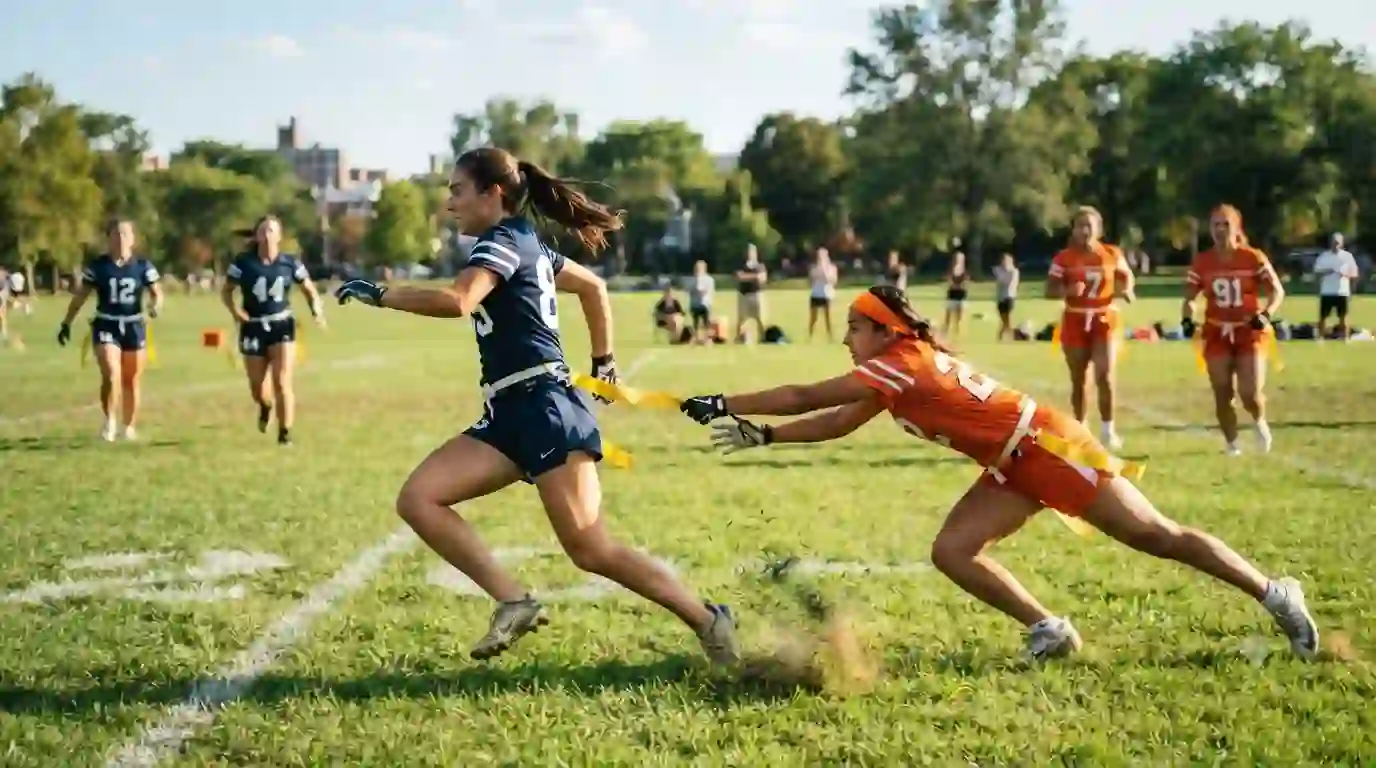
As someone who has coached youth flag football and competed in adult recreational leagues, I understand how confusing the switch from tackle can be. Flag football delivers all the excitement without the collisions, but new players often struggle with the distinct rules, equipment, and field layout. This guide lays out everything you need to know—rules, positions, drills, and where to find a league—so you step onto the field confident and prepared.
What Is Flag Football?
Flag football is a non-contact version of American football. Players wear a belt with two or three flags attached by Velcro or a pop socket. Instead of tackling, defenders pull a flag from the ball carrier to stop the play. The game emphasizes speed, agility, and strategy over physical force. Most leagues use 5-on-5 or 7-on-7 formats, and the field is shorter than a traditional gridiron. It’s played by kids, adults, and elite athletes, and has become one of the fastest-growing sports worldwide.
A Brief History of Flag Football
Flag football traces its roots back to military bases in the 1940s, where servicemen wanted a safer way to play during downtime. Fort Meade is often credited with hosting the first organized games. The sport grew through recreational departments and the YMCA. In 1997, the NFL launched NFL FLAG, a youth program that now counts over 500,000 participants annually. Today, the International Federation of American Football (IFAF) governs international competition, and flag football will make its Olympic debut at the Los Angeles 2028 Summer Games.
Flag Football Rules and Regulations
Rules vary by league, but most follow a standard framework designed to protect players and maintain fast-paced action.
- No contact – Tackling, blocking, and screening are illegal. Defenders must pull a flag cleanly.
- Flag guarding – Ball carriers cannot swat away a defender’s hand or cover their flags with their arms, ball, or clothing.
- Quarterback restrictions – In NFL FLAG rules, the quarterback cannot run past the line of scrimmage. Handoffs, pitches, and laterals to a running back or receiver are allowed.
- Scoring and downs: Teams typically need four downs to go to midfield and four more to score a touchdown (six points). One extra point try may be made from the 5-yard line or two from the 10-yard line.
- Interceptions – Are returnable, exactly like tackle football.
- Fumbles – A fumbled ball is dead at the spot. No recovery and advancement.
A full copy of the official NFL FLAG rulebook is available at nflflag.com and serves as the basis for most youth and adult recreational leagues.
Flag Football Field Dimensions and Setup
Field size depends on the age group and number of players, but a standard flag football field is shorter and narrower than a tackle field. There are no kickoffs; possessions start at the 5-yard line. Common dimensions are shown below.
| Age Group | Field Length (yards) | Field Width (yards) | End Zone Depth (yards) |
|---|---|---|---|
| 5–7 | 50 | 25 | 5 |
| 8–10 | 60 | 25 | 7 |
| 11–13 | 70 | 30 | 10 |
| High School & Adult | 80 | 30–40 | 10 |
Boundaries are marked with cones. Midfield is the first-down line to gain. The compact field creates more touches, rapid transitions, and higher scores.
Key Flag Football Positions and Roles
Flag football teams use fewer players, so many athletes play both offense and defense. Below are the core positions in a common 5-on-5 set.
| Position | Primary Responsibility | Key Skills |
|---|---|---|
| Quarterback (QB) | Directs offense, throws passes | Accuracy, quick decision-making |
| Center (C) | Snaps ball, runs short routes | Reliable snap, soft hands |
| Wide Receiver (WR) | Catches passes, stretches the field | Speed, crisp route running |
| Running Back (RB) | Takes handoffs, serves as outlet receiver | Elusiveness, vision |
| Rusher/Blitzer | Pressures QB after snap | Burst, timing |
| Defensive Back (DB) | Covers receivers, pulls flags | Agility, anticipation |
In 7-on-7 formats, you may see a dedicated safety, an extra receiver, and a more complex defensive structure. Every player must master flag pulling—a core skill that replaces tackling.
Essential Flag Football Equipment and Gear
One of the reasons flag football is so accessible is the minimal equipment list.
- Flag belt – A sturdy belt with two or three detachable flags. TIn competitive play, triple-flag belts are frequently used.
- Athletic shorts – Must not have pockets that could conceal flags. Many leagues mandate pocketless shorts.
- Mouthguard – Required in almost all youth and adult leagues for dental protection.
- Cleats – Molded plastic cleats are allowed. Metal spikes are prohibited.
- Football – Youth leagues use a junior-size ball; adults use an official-size ball.
No helmets, shoulder pads, or heavy protective gear are needed. That keeps costs low and lets players focus on skill.
How to Play Flag Football: Step-by-Step Basics
If you’re stepping onto the field for the first time, follow this sequence.
- Coin toss determines first possession. The team starting on offense takes the ball at its own 5-yard line.
- The snap initiates every play. The center snaps directly to the quarterback.
- The quarterback has three options: pass, pitch, and hand off. Remember, in most rule sets the QB cannot run past the line of scrimmage.
- Receivers run routes to get open. They must avoid contact with defenders.
- The play ends when a defender pulls the ball carrier’s flag, the ball hits the ground, or a score occurs.
- Down and distance resets if the offense crosses midfield. Otherwise, after four downs the ball turns over.
- Defense can blitz from seven yards behind the line of scrimmage in NFL FLAG rules, giving the QB a read window.
The game flows fast. A typical 40-minute game can see 10 or more possessions per team.
Flag Football Strategies and Playbook Essentials
Coaches build their attack around quick passes, misdirection, and getting the ball to playmakers in space.
- Short passing game – Slants, outs, and curls allow receivers to secure the ball and turn upfield before the defense closes.
- Motion pre-snap – Sending a receiver in motion forces the defense to communicate and reveals man or zone coverage.
- Handoffs and reverses – A well-timed handoff to the running back or a reverse to a receiver can catch aggressive rushers off guard.
- Defensive alignment – Playing man-to-man with one deep safety is common. Zone coverage prevents big plays but requires disciplined flag pulling.
- Blitz timing – A rusher must time the snap and attack from the designated spot. A seven-yard blitz rule gives the QB just enough time to release.
Every play should have a safe, short outlet. Turnovers kill drives, so ball security and smart decision-making are non-negotiable.
Flag Football Drills for Skill Development
Regular drill work sharpens the unique skills required in flag football. Here are three proven drills I’ve used with youth teams and in personal practice.
- QB target drill – Set up three cones as stationary receivers. The quarterback throws to each cone in rapid succession, working on footwork and accuracy under a timer.
- Flag-pulling gauntlet – A ball carrier runs through a line of four defenders spaced five yards apart. Each defender practices a clean two-handed pull without grabbing clothing.
- Route tree mirror – A receiver and defensive back line up. The receiver runs a random route; the defender mirrors and reaches for the flag on every cut. This builds coverage instincts and flag awareness.
Spend 15 minutes a session on these fundamentals, and you’ll see dramatic improvement in games.
Youth Flag Football Leagues and Programs
Youth flag football is booming. NFL FLAG remains the largest organization, with leagues in all 50 states and multiple countries. Other strong options include:
- YMCA youth flag football – Emphasizes participation, character development, and skill learning.
- Pop Warner flag – Offers a non-contact alternative in many local associations.
- i9 Sports – Focuses on convenience with one-day-per-week practice and game schedules.
According to the Centers for Disease Control and Prevention, non-contact sports like flag football significantly reduce concussion risk compared to tackle football. That safety profile makes flag football the entry point of choice for millions of families.
Adult Flag Football: Leagues, Tournaments, and Social Play
Adults have more options than ever. Recreational leagues run year-round in most cities, from competitive 5-on-5 to casual co-ed 7-on-7. Organizations like ZogSports, ClubWaka, and local parks departments offer structured seasons. Tournament circuits such as Flag Football World Championship Tour (FFWCT) attract top talent with cash prizes. I’ve played in co-ed leagues where the emphasis is on social connection and fitness, and the level of play is surprisingly high. Whether you’re a former tackle athlete or a complete beginner, the adult flag football community is welcoming and growing fast.
Flag Football vs. Tackle Football: Key Differences
Understanding the distinctions helps you adjust your game.
- Contact – Flag football eliminates tackling, blocking, and any form of physical obstruction.
- Equipment – No helmets, pads, or heavy gear.
- Field size – Smaller dimensions lead to more touches and higher scores.
- Player count – 5-on-5 or 7-on-7 creates open space, rewarding speed and agility.
- Play clock – Games move quicker. A standard half is 20 minutes running time.
- Injury profile – A 2023 study from the American Journal of Sports Medicine found that flag football reduces overall injury risk by nearly 70% compared to tackle football among youth players.
These differences make flag football a distinct sport that stands on its own, not just as a training ground for tackle.
Health and Fitness Benefits of Playing Flag Football
Flag football offers a full-body workout wrapped in competition. A 60-minute game can burn 500 to 700 calories, according to the American Council on Exercise. You’ll build cardiovascular endurance, explosive acceleration, and lateral agility. The constant cutting and direction changes strengthen ankles, knees, and hips. Beyond the physical, the sport sharpens mental focus, decision-making under pressure, and teamwork. Many former tackle players I’ve coached say they actually feel more gassed after a flag game because the non-stop movement demands continuous effort on both sides of the ball.
How to Start a Flag Football Team or League
Starting your own team or local league is simpler than you might expect.
- Recruit players – Begin with friends, coworkers, or your community social media groups. Aim for 8–12 players for a 5-on-5 team.
- Secure a field – Many parks, school fields, and recreation centers rent space at low cost. Ensure the field dimensions match the format you’ll play.
- Obtain insurance and waivers – Most established leagues require liability coverage. Simple sports insurance policies are affordable.
- Register with a sanctioning body – If you want official standing, register with NFL FLAG or IFAF for access to tournaments and standardized rules.
- Promote – Use local community boards, Facebook groups, and flyers at gyms. Flag football’s low cost and inclusive nature attract interest quickly.
A few dedicated organizers can build a thriving league in a matter of months.
Flag Football Tournaments and Championships
Flag football’s competitive ceiling keeps rising. The IFAF Flag Football World Championships take place every two years, with the U.S. men’s and women’s teams consistently medaling. The sport’s inclusion in the 2028 Los Angeles Olympics is accelerating investment, talent identification, and media coverage. Regional tournaments like the NFL FLAG Bowl, the Flag Football World Championship Tour, and various state games offer pathways from local play to national recognition. Whether your goal is a weekend trophy or an Olympic bid, the infrastructure now exists to support that journey.
Common Flag Football Mistakes and How to Avoid Them
Even seasoned athletes make these errors when they first pick up a flag belt.
- Flag guarding – Instinctively swatting a defender’s hand. Practice carrying the ball high with your off-arm extended, not draped.
- Playing too aggressive on defense – Overrunning the ball carrier or grabbing clothing. Focus on controlled footwork and two-hand flag pulls.
- QB holding the ball too long – In a fast 5-on-5 game, a four-second release is an eternity. Develop a quick read progression.
- Forgetting the midfield first-down rule – Many drives stall because the offense doesn’t realize they only need to cross midfield, not score in one chunk.
- Wearing shorts with pockets – A simple oversight that gets you flagged (no pun intended) in many leagues.
Awareness of these pitfalls shortens the learning curve dramatically.
Frequently Asked Questions (FAQs)
Is flag football safe for kids?
Yes. The non-contact format eliminates deliberate collisions. Data from the CDC and numerous sports medicine studies confirm that flag football carries a significantly lower risk of concussion and orthopedic injury than tackle football, making it a smart entry point for children.
What is the number of players on a flag football team?
Most recreational leagues use a 5-on-5 format, while competitive adult and some youth leagues play 7-on-7. Roster sizes typically run from 8 to 14 players to allow substitutions.
What are the basic flag football rules for beginners?
The core rules: no contact, no flag guarding, four downs to reach midfield then four to score, quarterback cannot run past the line of scrimmage (in NFL Flag style), and defense pulls flags to end plays. Everything else layers on that foundation.
Can adults play flag football recreationally?
Absolutely. Adult recreational leagues, co-ed social leagues, and competitive tournament circuits exist across the country. Organizations like ZogSports and ClubWaka make joining easy, and many don’t require any previous football experience.
Do you wear pads in flag football?
No. There are no helmets, shoulder pads, or hip pads. The only required protective gear is a mouthguard, and some players choose soft knee or elbow sleeves for turf protection.
What is the NFL Flag football program?
The NFL’s official kids flag football league is called NFL FLAG. It provides standardized rules, equipment, and coach training to communities nationwide, serving over half a million boys and girls each year.
The next time you hear pads cracking on a football field, remind yourself there’s an equally thrilling option that demands speed, smarts, and teamwork without the collisions. Flag football sharpens every athletic instinct you have, builds lasting friendships, and gives you a sport you can play from age six to sixty. Find a local league today—or start one. Pull on a belt, learn the rules, and take that first snap. Your best play hasn’t happened yet.