Starbucks Frappuccino Bottle Guide: Every Flavor, Price, and Caffeine Fact You Need
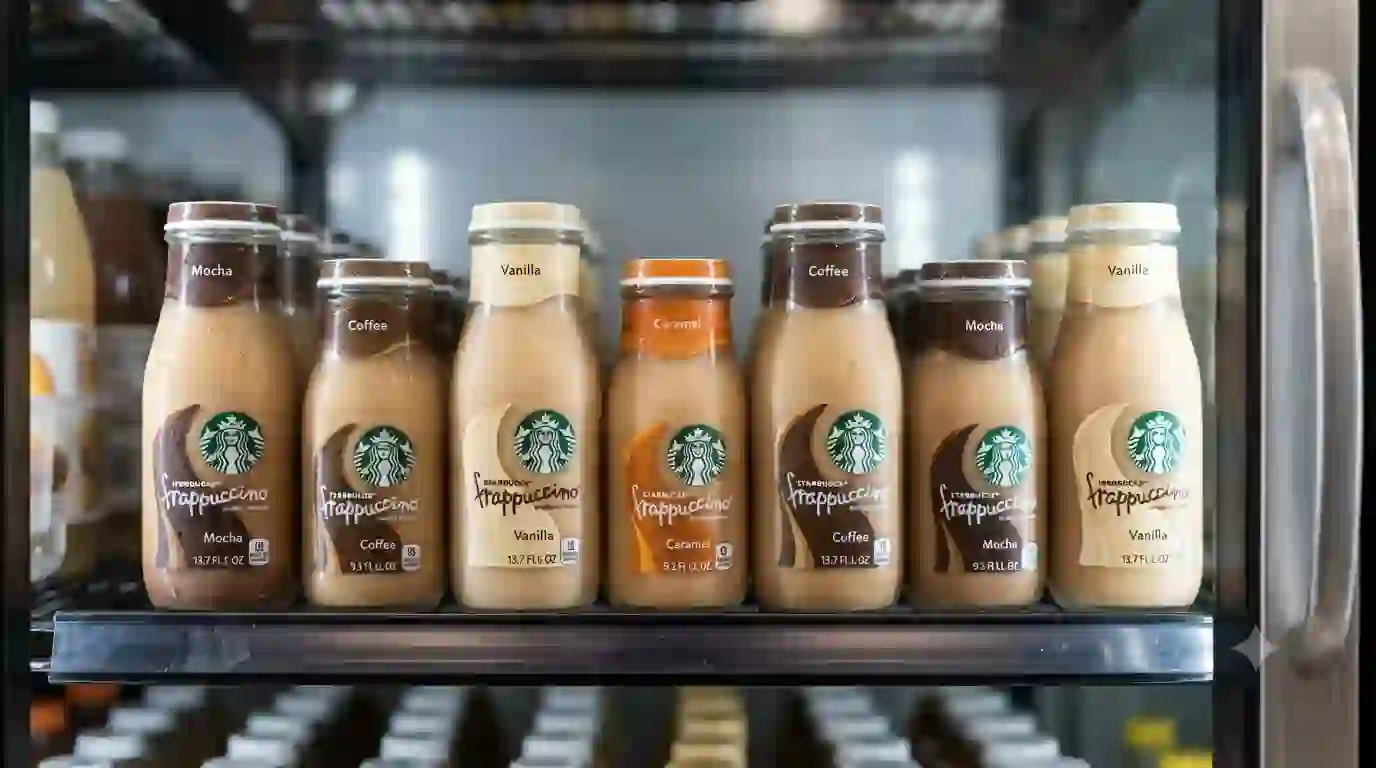
Standing in the cooler aisle, every Starbucks Frappuccino bottle looks the same until you flip it over and spot wildly different sugar and caffeine numbers. Grab the wrong one and you’re stuck with a sugar crash or way more caffeine than you planned for. This guide breaks down every flavor, size, price, and nutrition fact so you can pick the right bottle in ten seconds flat.
What Is a Starbucks Frappuccino Bottle?
A Starbucks Frappuccino bottle is a ready-to-drink coffee beverage sold in grocery stores, convenience stores, and online retailers. Unlike the blended drink made behind the counter, the bottled version arrives pre-mixed, chilled, and sealed at the factory.
Starbucks produces it through a joint venture with PepsiCo called the North American Coffee Partnership. Each bottle blends brewed coffee, milk, sugar, and flavoring into a smooth, grab-and-go drink. You’ll usually find it stocked next to energy drinks and iced teas in the refrigerated case.
The Story Behind the Bottle
Starbucks first bottled the Frappuccino in 1996, a year after the blended café drink debuted. PepsiCo handled the bottling and distribution, freeing Starbucks to focus on the coffee itself. That partnership turned a café-only treat into a shelf-stable product found in nearly every U.S. supermarket.
The original bottle held 9.5 fluid ounces. Over the years, Starbucks expanded most flavors into a larger 13.7 fluid ounce bottle, a jump of roughly 44%. Both sizes still exist today, depending on the flavor and the store.
Every Bottled Frappuccino Flavor You Can Buy
Flavor variety is the main reason people keep one stocked in the fridge. The core lineup has stayed fairly consistent for years, with a few newer additions rounding it out.
Here’s what you’ll commonly find on shelves:
- Coffee – the original blend, with the strongest straight-coffee bite
- Mocha – brewed coffee, milk, and mocha sauce for a chocolate-coffee combo
- Vanilla – smooth and sweet, with less caffeine than Coffee or Mocha
- Caramel – caramel flavoring blended with brewed coffee and milk
- White Chocolate Mocha – a sweeter, dessert-style pick
- Caramelized Vanilla Honey – brewed coffee sweetened with honey, plus a cold brew splash for extra depth
- Oatmilk Caramel Waffle Cookie – a dairy-free option with a cookie-inspired twist
- Oatmilk Dark Chocolate Brownie – another oatmilk-based flavor for plant-milk drinkers
- Frappuccino Lite – a lower-calorie version, in Vanilla Gelato or Chocolate Hazelnut Gelato, landing near 100 calories a bottle
Seasonal flavors, including Pumpkin Spice, appear on shelves for a few months each year. Availability shifts by region, so no single store carries the entire list at once.
Bottle Sizes Explained: 9.5 oz vs. 13.7 oz
Two sizes dominate the shelf: 9.5 fluid ounces and 13.7 fluid ounces, with a smaller 6.5 fluid ounce glass bottle used for a few specialty runs. Knowing the difference helps you match the bottle to how much coffee, sugar, and caffeine you actually want.
- The original serving of 9.5 fl oz is more appropriate for portion control or a milder afternoon boost.
- 13.7 fl oz – the standard size for most flavors today
- 6.5 fl oz – a smaller glass bottle, mainly used for select Caramel runs
Even in the same flavor, a 13.7-ounce bottle has significantly more calories, sugar, and caffeine than the smaller one. Check the label before you buy if you’re watching any of the three.
Nutrition Facts by Flavor and Size
Nutrition varies by flavor and size, but a few patterns hold steady across the lineup. Coffee and Mocha tend to run the highest in calories and caffeine, while Vanilla and the Lite versions sit lower.
| Flavor | Size | Calories | Sugar | Caffeine |
|---|---|---|---|---|
| Coffee | 13.7 fl oz | 300 | 47g | 110 mg |
| Coffee | 9.5 fl oz | ~200 | ~31g | 75 mg |
| Mocha | 13.7 fl oz | ~270 | ~43g | ~110 mg |
| Vanilla | 13.7 fl oz | ~280 | ~45g | ~75 mg |
| Vanilla | 9.5 fl oz | 200 | 31g | 45 mg |
| Caramel | 13.7 fl oz | ~280 | ~44g | ~90 mg |
| Caramel | 9.5 fl oz | ~200 | ~30g | 65 mg |
| White Chocolate Mocha | 13.7 fl oz | ~280 | ~42g | ~75 mg |
| Frappuccino Lite (Vanilla Gelato) | 9.5 fl oz | 100 | ~15g | ~65 mg |
Figures are approximate, pulled from PepsiCo’s official nutrition database and current bottle labels. Starbucks and PepsiCo update recipes occasionally, so check the label on your specific bottle for exact numbers.
Every bottle uses reduced-fat or low-fat milk as its base, along with sugar, brewed coffee, and flavoring specific to each variety. If sugar is a concern, the Lite line or a smaller bottle size cuts that number close to half.
What’s Actually Inside the Bottle
Ingredients shift slightly by flavor, but the base recipe stays consistent across the lineup. Brewed coffee, reduced-fat milk, sugar, and a stabilizer called pectin form the foundation of nearly every variety.
Most flavors also list maltodextrin, natural or artificial flavoring, and a small amount of ascorbic acid to help preserve freshness. The coffee itself comes from arabica beans, the same beans Starbucks uses behind the counter. Every bottle carries an OU Kosher Dairy certification, which shows up printed on the label.
Oatmilk versions swap dairy milk for an oat-based blend, making them suitable for people avoiding lactose. None of the flavors in the current lineup are naturally caffeine-free, so anyone avoiding caffeine entirely should skip the category altogether rather than hunting for a decaf option.
What Is the Caffeine Content of a Starbucks Frappuccino?
A standard 13.7 fl oz Starbucks Frappuccino bottle carries somewhere between 75 mg and 110 mg of caffeine, depending on the flavor. That’s roughly in line with a small cup of drip coffee, though weaker than a cold brew or an energy drink of the same size.
Coffee and Mocha sit at the top of the range, near 110 mg. Vanilla and White Chocolate Mocha run lighter, closer to 75 mg. The smaller 9.5 fl oz bottle scales down proportionally, landing between 45 mg and 90 mg.
For context, up to 400 mg of caffeine a day is generally considered safe for healthy adults, according to guidance summarized by the Mayo Clinic. A single bottle uses roughly a fifth to a quarter of that daily allowance, leaving plenty of room for a second coffee without going over.
Price Guide: What You’ll Actually Pay
Price depends heavily on where you shop and whether you buy single bottles or a multipack. A single bottle at a convenience store or gas station typically runs $3.00 to $4.00.
Buying by the case brings the per-bottle cost down substantially:
- Single bottle (convenience store, gas station): $3.00–$4.00
- 12-pack (grocery store or online): roughly $28–$40, or about $2.30–$3.30 per bottle
- Warehouse club packs (Costco, Sam’s Club): often the lowest per-bottle price, especially on sale
Buying by the case is almost always cheaper per unit than grabbing single bottles on the go, so stocking up ahead of a busy week can save real money over a month.
Where to Buy One
Availability is one of the biggest advantages of the bottled format over a café visit. You can find one at:
- Grocery store chains, in the refrigerated coffee or energy drink aisle
- Convenience stores and gas stations
- Big-box retailers like Target and Walmart
- Warehouse clubs like Costco and Sam’s Club
- Online retailers such as Amazon, usually sold by the case
Stock and flavor selection vary by location, so a store that carries five flavors one month might only have three the next. Online retailers tend to offer the widest flavor range, including Oatmilk and Lite versions that smaller stores often skip.
Seasonal flavors sell out fastest, especially in the weeks after they first hit shelves each fall. If you spot a limited-run flavor you like, grabbing a multipack early beats waiting and finding an empty shelf later in the season.
Bottled vs. Café Frappuccino: What’s Different
A bottled Frappuccino and the blended drink from a Starbucks store share a name, but they’re not identical. The café version gets blended fresh with ice, giving it a thicker, slushier texture straight out of the blender.
The bottled version skips the ice and blending step entirely. It’s a smooth, chilled liquid meant to be drunk straight from the bottle or poured over ice at home. The bottled version also can’t be customized with extra shots, whipped cream, or syrup pumps the way an in-store order can.
Flavor intensity differs too. Because the bottled drink is manufactured for shelf stability, it tends to taste sweeter and milder than a fresh café pour, especially in the coffee-forward flavors.
Is a Starbucks Frappuccino Bottle Healthy?
A Starbucks Frappuccino bottle falls into the same category as most sweetened coffee drinks: fine as an occasional treat, not something to build a daily habit around. Most flavors carry 30 to 47 grams of sugar per bottle in a single serving.
A few simple ways to keep it lighter:
- Choose the 9.5 fl oz size instead of the 13.7 fl oz bottle
- Pick the Frappuccino Lite line, which drops calories to around 100 per bottle
- Pour half over ice and save the rest for later instead of finishing the full bottle at once
None of this turns the drink into a health beverage, and it isn’t meant to be one. Treat it the way you’d treat a milkshake or a soda — enjoyable, but worth watching if you’re counting sugar or calories closely.
How to Store and Serve It
An unopened bottle doesn’t need refrigeration until you’re ready to drink it, thanks to the sealed, shelf-stable packaging. Most bottles carry a shelf life of six to twelve months from the production date when stored in a cool, dry spot.
Once opened, refrigerate it and finish it within a day or two for the best taste. A few serving tips:
- Chill the bottle for at least two hours before drinking for the best flavor
- Shake gently before opening, since some settling is normal
- Pour over ice if you prefer a thinner, more diluted texture
Never freeze the bottle. The dairy content separates once frozen and thawed, which ruins the texture.
Best Flavors, Based on What People Actually Buy
Coffee and Mocha consistently rank as the top sellers across major retailers. Both deliver a stronger coffee flavor that fans of the original café drink tend to prefer.
Vanilla and Caramel follow close behind, popular with people who want a sweeter, dessert-style sip without a strong coffee edge. The Oatmilk flavors have grown quickly in popularity too, driven by demand for dairy-free options.
If you’re trying one for the first time, Mocha or Vanilla are the safest starting points. Both balance sweetness and coffee flavor well enough to suit most tastes.
Can You Recreate the Bottled Version at Home?
Some fans try to copy the bottled taste at home using cold brew or leftover drip coffee, milk, sugar, and ice blended together. The result comes close in flavor but rarely matches the smooth, non-icy texture of the factory-made drink, since home blenders leave more ice crystals behind.
A simple starting formula: combine one cup of strong chilled coffee, half a cup of milk, two tablespoons of sugar or syrup, and a cup of ice, then blend until smooth. Adjust the sugar and milk ratio to land closer to your favorite flavor, whether that’s a coffee-forward Mocha style or a sweeter Vanilla-style pour.
Homemade versions also let you control the caffeine and sugar directly, which is useful if the packaged nutrition numbers run higher than you’d like. The trade-off is convenience — a fresh batch takes a few minutes of prep, while grabbing one from the fridge takes none.
Frequently Asked Questions
What exactly is a Starbucks Frappuccino bottle? A Starbucks Frappuccino bottle is a ready-to-drink, pre-mixed version of the Frappuccino coffee drink, made by Starbucks in partnership with PepsiCo. Unlike the café drink, it arrives chilled and shelf-stable, ready to drink straight from the bottle.
How much caffeine does a Starbucks Frappuccino bottle contain? A 13.7 fl oz bottle contains between 75 mg and 110 mg of caffeine, depending on the flavor. The smaller 9.5 fl oz bottle contains roughly 45 mg to 90 mg.
How many calories are in a Starbucks Frappuccino bottle? Most 13.7 fl oz bottles fall between 270 and 300 calories, while the Lite line drops to around 100 calories. Calorie counts shift slightly by flavor, so check the label for the exact figure.
What’s the difference between the 9.5 oz and 13.7 oz Starbucks Frappuccino bottle? The 13.7 fl oz bottle is the newer, larger standard size, about 44% bigger than the original 9.5 fl oz bottle. It carries proportionally more calories, sugar, and caffeine than the smaller version.
Where can you buy a Starbucks Frappuccino bottle? Grocery stores, convenience stores, gas stations, Target, Walmart, Costco, and online retailers such as Amazon all stock it. Selection and flavor variety depend on the specific store and region.
How long does an unopened Starbucks Frappuccino bottle last? An unopened bottle typically lasts six to twelve months when stored in a cool, dry place, per the date printed on the label. Once opened, refrigerate it and drink it within a day or two.
Grab the Right Bottle Next Time
A Starbucks Frappuccino bottle earns its spot in the cooler aisle for one simple reason: it delivers real Starbucks coffee flavor without a drive-thru line or a blender. Whether you land on Coffee, Mocha, Vanilla, or one of the Oatmilk options, checking the size and nutrition label first means you get exactly the treat you’re after.
Next time you’re stocking the fridge, pick a flavor from this guide, grab the size that fits your day, and enjoy it cold. Save this page so the numbers are one click away the next time you’re comparing bottles at the store.