Nigiri vs Sashimi: The Real Difference & How to Tell Them Apart
Nigiri vs Sashimi: What’s the Real Difference?
You’re standing at a sushi bar, menu in hand, and you’ve narrowed it down to two things: nigiri or sashimi. They both look like beautiful slices of raw fish. They’re both served with soy sauce and a dab of wasabi. So what exactly is the difference — and does it actually matter when you order?
It matters quite a bit. The difference between nigiri and sashimi is not a question of quality or style preference alone — they are fundamentally different dishes built on different culinary philosophies. One is a type of sushi; the other isn’t sushi at all. Understanding this distinction will change how you read a menu, how you eat, and honestly, how much you enjoy both.
This guide breaks down everything: definitions, preparation methods, nutritional profiles, taste differences, and exactly how to order each one with confidence.
What Is Nigiri?
Nigiri (formally nigirizushi) is a hand-pressed sushi made of a small oblong mound of vinegared rice topped with a single slice of raw or cooked seafood, occasionally bound by a thin strip of nori seaweed.
The word nigiri comes from the Japanese verb nigiru — to grip or squeeze. That grip is everything. A skilled itamae (sushi chef) presses the rice with just enough force to hold its shape while keeping it airy enough to fall apart gently at first bite. Get the pressure wrong and the rice either crumbles or compacts into a dense block — neither is acceptable.
The Rice Is the Point
What separates great nigiri from average nigiri is the shari — the seasoned sushi rice. Short-grain Japanese rice is cooked, then folded with a precise mixture of rice vinegar, sugar, and salt while still warm, then fanned to achieve the right temperature and texture. The rice should be body temperature when it reaches you — warm enough to contrast against the cool neta (topping), but not so hot it cooks the fish.
Between the rice and the topping, a thin scrape of wasabi is often placed directly — you may not even see it. This is by design. In traditional Edo-mae sushi culture, the chef calibrates the wasabi quantity for the specific fish, and adding more from the side dish is considered unnecessary (though entirely acceptable in modern settings).
Origins: Edo-Period Tokyo Street Food
Nigiri as we know it was developed in Edo (present-day Tokyo) during the early 19th century. Before refrigeration, fish had to be cured, pickled, or vinegared to remain safe. Vinegared rice served the dual purpose of preservation and flavor — a practical street food solution that became a culinary art form.
The style developed in Tokyo is called Edo-mae sushi, meaning “in front of Edo Bay” — a reference to the fish sourced from Tokyo Bay. This regional style emphasizes restraint, technique, and ingredient quality above all else.
Common Nigiri Toppings
| Japanese Name | English |
|---|---|
| Sake | Salmon |
| Maguro | Bluefin tuna |
| Ebi | Cooked shrimp |
| Hamachi | Yellowtail |
| Unagi | Freshwater eel (grilled) |
| Tamago | Sweet egg omelette |
| Hotate | Scallop |
| Ika | Squid |
Nigiri Variations Worth Knowing
Gunkan-maki (“battleship roll”) is a nigiri variant where nori is wrapped around the rice in an oval wall to hold loose toppings like sea urchin (uni), salmon roe (ikura), or finely chopped tuna (negitoro). Technically it’s a hybrid form, but it falls under the nigiri umbrella in most Japanese classification systems.
Aburi nigiri is seared nigiri — the top is lightly torched, creating a caramelized, slightly smoky surface on fish like salmon or scallop. This style became widely popular outside Japan and adds a completely different flavor dimension.
What Is Sashimi?
Sashimi is a Japanese dish of precisely sliced raw fish or seafood served entirely without rice, accompanied by soy sauce, wasabi, finely shredded daikon radish, and often a shiso leaf as garnish.
The word sashimi literally translates as “pierced body” — a reference to the historical practice of leaving a small fin or tail attached to the sliced fish to identify the species. That practice is mostly ceremonial now, but the name stuck.
The Craft of the Cut
Sashimi is where Japanese knife work becomes a serious discipline. The texture and flavor of a fish slice changes dramatically depending on how it’s cut — thickness, angle, and even the direction relative to the muscle grain all matter.
The three most common cuts used in professional sashimi preparation:
- Hira-zukuri — the standard flat, rectangular slice. Used for most firm fish like tuna and salmon. The blade draws straight across the fillet in one clean motion.
- Usu-zukuri — an extremely thin, almost translucent diagonal slice. Reserved for delicate white fish like flounder (hirame) where the subtle flavor needs the cut to be as thin as possible.
- Kaku-zukuri — small, cubed cuts used for firm fish or to create visual variety on a presentation plate.
A sashimi knife — the yanagiba — is single-beveled, meaning it is sharpened on one side only. This design allows an exceptionally clean cut that doesn’t crush the fish’s cellular structure, preserving both flavor and texture in a way a standard Western chef’s knife cannot replicate.
Freshness Is Non-Negotiable
Because sashimi is served completely uncooked and unaccompanied by any ingredient that might mask a compromised flavor, the fish must meet the highest freshness standards. In Japan, fish used for sashimi is graded separately from fish used for cooking — the concept of sashimi-grade fish refers not to an official regulatory standard (at least not in most Western markets) but to the handling, sourcing, and speed of processing from catch to plate.
The daikon garnish is not decorative. Finely shredded daikon (tsuma) has a mild enzymatic quality that cleanses the palate between bites and is thought to aid digestion of raw protein — a functional choice dressed as an aesthetic one.
Most Common Sashimi Fish
| Japanese Name | English | Flavor Profile |
|---|---|---|
| Sake | Salmon | Buttery, rich, mild |
| Maguro (akami) | Lean tuna | Clean, meaty, firm |
| Chutoro | Medium fatty tuna | Balanced, silky |
| Otoro | Fatty tuna belly | Intensely rich, melts in mouth |
| Hamachi | Yellowtail | Slightly sweet, firm |
| Tako | Octopus | Chewy, mild brine |
| Hotate | Scallop | Sweet, delicate |
| Ika | Squid | Subtle, slightly chewy |
Nigiri vs Sashimi: The 5 Key Differences
Here’s the full head-to-head comparison. These are the differences that matter when you’re ordering, eating, or understanding what you’re looking at on the plate.
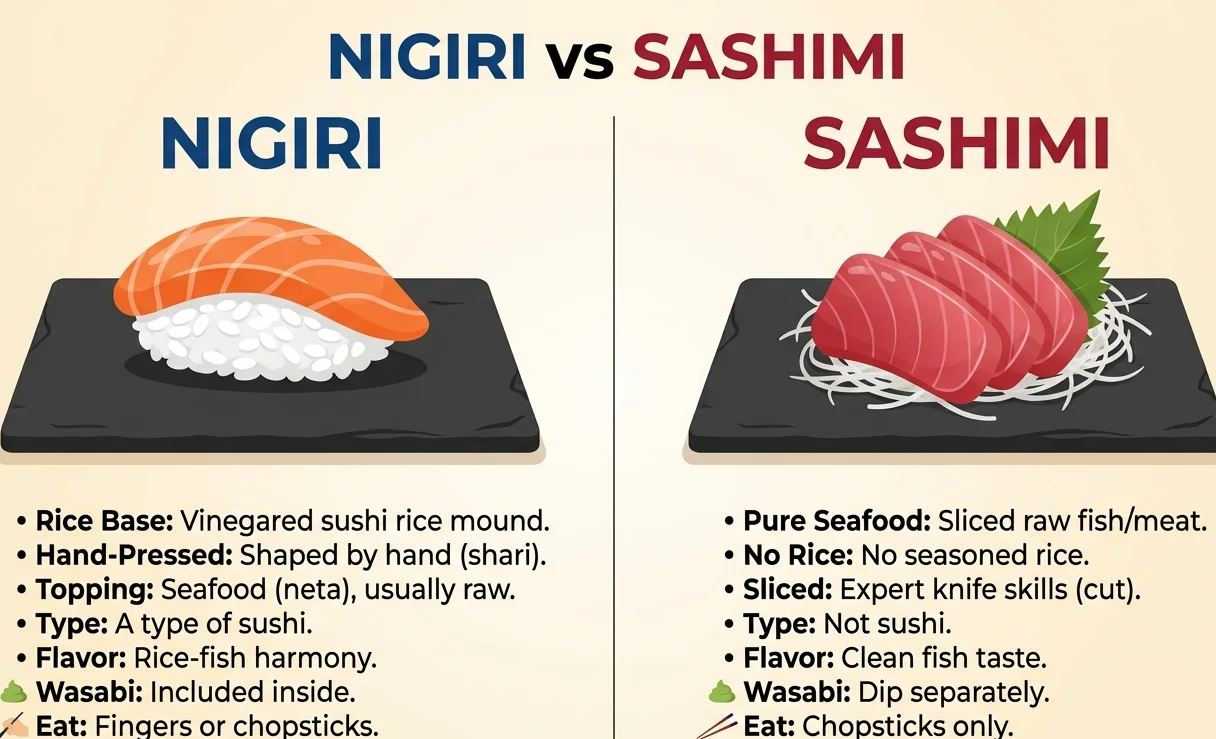
| Feature | Nigiri | Sashimi |
|---|---|---|
| Rice | Vinegared sushi rice, hand-pressed | None |
| Category | A type of sushi | Not sushi |
| Primary component | Fish/seafood + seasoned rice | Pure fish or seafood only |
| Carbs per serving | ~9–12g per piece | 0g |
| Calories per piece/serving | ~40–60 kcal per piece | ~25–40 kcal per 2–3 slices |
| Wasabi placement | Hidden between rice and fish (traditional) | Served on the side |
| Soy sauce dipping | Fish side dipped, not the rice | Slice dipped directly |
| Chef skill emphasis | Rice temperature, shaping, topping balance | Knife technique, freshness sourcing |
| Typical serving | 2 pieces per order | 3–5 slices per order |
| Carb-free option | No (unless brown rice sub requested) | Yes |
1. Rice — The Defining Dividing Line
This is the single clearest difference. Nigiri has rice; sashimi does not. But it’s more nuanced than simply “rice vs no rice.” In nigiri, the rice is an active flavor component — seasoned, temperature-calibrated, and shaped to complement the specific fish. It’s not a vehicle for the topping; it’s a co-equal ingredient.
2. Classification — One Is Sushi, One Isn’t
Sushi is defined by the vinegared rice (shari), not the raw fish. This surprises most people. Nigiri is sushi because it has seasoned rice as its foundation. Sashimi, with no rice at all, falls outside the definition of sushi — it’s its own separate dish category in Japanese cuisine.
3. Preparation Demands Different Skills
Both require exceptional raw ingredients, but the technical emphasis differs. Nigiri challenges a chef’s ability to calibrate rice — water ratio, vinegar blend, hand pressure, temperature management. Sashimi challenges the knife. A sashimi chef’s ability to cut a clean hira-zukuri slice without tearing muscle fibers is the primary measure of their skill.
4. How You Eat It
Traditional sushi etiquette says nigiri can be eaten with your hands — and in many Tokyo sushi bars, this is actually preferred. The fish side goes down onto the tongue, not the rice side. For sashimi, chopsticks are standard, with each slice lightly dipped fish-first into soy sauce mixed (at your discretion) with wasabi.
Never soak either in soy sauce. A light touch — the fish barely grazes the surface — is the correct approach. Drowning a piece of otoro in soy sauce is considered a waste of a fish that costs what it costs.
5. Nutritional Profile
Both are excellent lean protein sources. The meaningful difference is carbohydrate content. Sashimi has effectively zero carbohydrates and sits very high in protein density per calorie — making it one of the cleanest high-protein foods you can eat at a restaurant.
Which Is Healthier: Nigiri or Sashimi?
The honest answer depends on your dietary goals, but here’s the factual breakdown:
Sashimi (per typical restaurant serving of 3–5 slices):
- Calories: approximately 80–130 kcal
- Protein: 15–25g
- Carbohydrates: 0g
- Fat: 1–8g (varies heavily by fish — salmon is higher fat, tuna is lower)
Nigiri (per 2-piece serving):
- Calories: approximately 90–130 kcal
- Protein: 8–14g
- Carbohydrates: 18–24g
- Fat: 1–5g
For low-carb or keto diets: Sashimi is the clear choice — zero carbs, high protein, and naturally gluten-free as long as the soy sauce is replaced with tamari.
For general balanced nutrition: Nigiri is a very reasonable choice — the carbohydrate load from sushi rice is moderate, and the portion control built into individual pieces makes overeating less likely than with most Western starchy dishes.
For heart health: Fatty fish like salmon and tuna — in both nigiri and sashimi form — are excellent sources of omega-3 fatty acids (EPA and DHA). A typical salmon sashimi serving provides roughly 1–2g of combined omega-3s, which aligns with recommendations from the American Heart Association for weekly omega-3 intake.
One practical note: traditional sushi rice is seasoned with both vinegar and sugar. While the amount per piece is small (~1–2g of sugar per nigiri), people managing blood sugar carefully should account for it.
How to Order Nigiri and Sashimi Like a Pro
In a traditional Japanese sushi restaurant, the meal typically follows a sequence. Sashimi appears first — served as a course to showcase the fish without distraction, before the palate is influenced by seasoned rice. Nigiri follows as the main sushi course.
Practical ordering tips:
- Ask for omakase if you want the chef to decide — it means “I leave it to you” and is the best way to eat at a serious sushi counter. The chef will sequence the fish from lighter to richer flavors.
- Order sashimi to assess quality first. Because there’s nothing to hide behind, sashimi reveals the freshness and sourcing quality of a restaurant’s fish instantly.
- For nigiri, ask what’s freshest that day. Fish availability changes with season and supply, and the best pieces on any given day depend on what arrived that morning.
- Freshness cues to look for: Translucent, glistening slices with vibrant color. No fishy smell (fresh fish smells like the sea, not “fishy”). Tuna should be deep red, not grey at the edges. Salmon should have clean, bright orange-pink flesh.
- Soy sauce technique: Dip the fish side, never the rice side. Rice absorbs soy sauce too fast and becomes salty and soggy. This is especially important with nigiri.
Nigiri vs Sashimi: Taste, Texture & Experience
Eating nigiri and eating sashimi are genuinely different sensory experiences — not just different foods, but different relationships with the fish.
Nigiri is about harmony. The fish arrives against a backdrop of warm, lightly seasoned rice. The temperature contrast — cool raw fish against slightly warm rice — is intentional and meaningful. The shari’s subtle acidity and sweetness frame the fish’s natural flavor, softening anything too intense and amplifying anything too delicate. A well-made piece of tuna nigiri isn’t just tuna on rice; the rice is actively shaping how the tuna tastes.
Sashimi is about clarity. Without rice, seasoning, or anything beyond a dab of wasabi and soy sauce, the fish has nowhere to hide and nothing to lean on. What you taste is exactly what the fish is — its fat content, its freshness, its texture, its individual character. A slice of otoro (fatty tuna belly) dissolves on the tongue with a richness that no rice could improve or should interrupt. Sashimi demands better fish than nigiri, and the best sashimi chefs argue that it’s the purer form of fish appreciation.
The texture differences are equally distinct. Nigiri has that two-layer experience — the slight chew and give of the rice, then the texture of the fish above it. Sashimi’s mouthfeel is entirely the fish: the silkiness of salmon, the firm meaty pull of yellowtail, the almost creamy collapse of otoro.
Edo-mae vs Kansai Style: A Regional Dimension
Japanese sushi isn’t monolithic. Two major regional traditions have shaped how both nigiri and sashimi are made:
Edo-mae (Tokyo-style) emphasizes restraint, minimalism, and technique. Fish is often lightly marinated, cured, or brushed with nikiri soy sauce before serving. The chef does the seasoning — your job is to eat it as presented.
Kansai-style (Osaka region) tends toward bolder flavors, pressed sushi (oshizushi), and a more generous approach to saucing and garnish. Sashimi presentations in Kansai restaurants are often more elaborate — larger plates, more garnish variety, greater visual theatricality.
Neither is superior; they represent different philosophies about what the diner’s experience should be.
Mini-Glossary of Essential Terms
| Term | Meaning |
|---|---|
| Shari | Vinegared sushi rice |
| Neta | The topping on nigiri |
| Itamae | Sushi chef / head chef |
| Tsuma | Shredded daikon garnish |
| Omakase | “Chef’s choice” tasting experience |
| Yanagiba | Single-bevel sashimi knife |
| Nikiri | Reduced soy sauce brushed on nigiri |
| Aburi | Flame-seared preparation |
| Hira-zukuri | Standard rectangular sashimi slice |
| Usu-zukuri | Ultra-thin diagonal sashimi slice |
Conclusion
Nigiri and sashimi share DNA — both celebrate exceptional fish, both require knife skills and sourcing discipline — but they represent two distinct ideas about what makes raw seafood worth eating. Nigiri asks rice to be an equal partner. Sashimi insists the fish needs no partner at all.
Neither is better. They’re answers to different questions. Now that you know the difference, you can order with intention, eat with attention, and appreciate what each one is actually trying to do.
Ready to go deeper? Explore our guide on Maki vs Temaki to understand the rolled sushi world — and continue building toward ordering like you’ve been eating at sushi bars your whole life.
FAQ SECTION
Is nigiri the same as sushi? Yes — nigiri is a specific type of sushi. Sushi, by definition, refers to any dish built around vinegared rice (shari). Because nigiri places that seasoned rice at its center, it qualifies as sushi. The common misconception is that “sushi” means raw fish — it doesn’t. The rice is what defines it.
Is sashimi healthier than nigiri? Sashimi is lower in calories and carbohydrates — it contains zero carbs and delivers a higher protein-to-calorie ratio per serving. For keto, low-carb, or calorie-restricted diets, sashimi is the stronger choice. Nigiri is still very nutritious, offering lean protein with a moderate carbohydrate portion from seasoned rice.
Can you eat nigiri with your hands? Yes, and in many traditional Tokyo sushi restaurants, eating nigiri with your hands is actually preferred over chopsticks. It gives you better control and reduces the chance of the piece falling apart. When you do eat nigiri by hand, turn it fish-side down onto your tongue — that’s the correct technique.
What is the difference between nigiri and maki? Nigiri is hand-pressed rice topped with fish — no seaweed wrapper, no rolling. Maki is sushi rice and fillings rolled inside a sheet of nori, then sliced into rounds. Maki is what most Western diners picture as “sushi rolls” — California rolls, spicy tuna rolls, and so on. Nigiri is simpler and more traditional.
Is sashimi always raw? Not always. While most sashimi is served raw, some proteins are cooked — tako (octopus) is almost always served boiled because the texture of raw octopus is unpleasant for most diners, and unagi (eel) is always grilled. “Sashimi” refers to the preparation and presentation style (sliced, served without rice), not strictly to rawness.
Why is sashimi more expensive than nigiri? Sashimi uses a larger quantity of premium fish per order — typically three to five slices compared to one slice per nigiri piece — and has no rice to extend the portion. Additionally, sashimi demands the highest fish quality in the restaurant (there’s nothing to mask subpar sourcing), so it commands fish that costs more per kilogram at the supply level. The knife skills required for clean sashimi cuts also represent significant professional investment.