Stromboli vs Calzone: The Ultimate Difference Guide
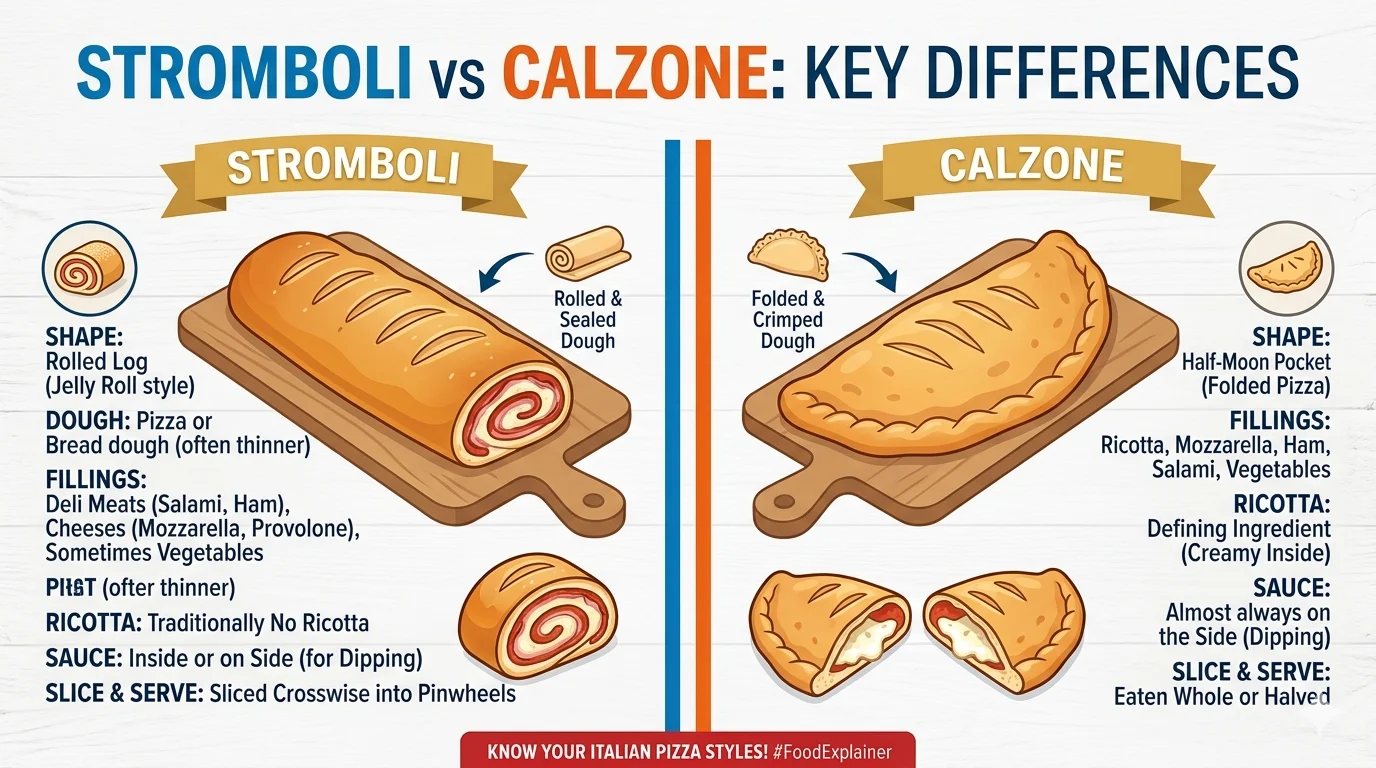
You’re not alone. Even seasoned food lovers mix them up. But here’s the thing: they look similar, yet they are fundamentally different. One is a folded half-moon pocket born on the streets of Naples. The other is a rolled-up log invented in Philadelphia. You will not be able to confuse them again once you know what to look for.
Let’s settle the stromboli vs calzone debate once and for all. By the end of this guide, you’ll know exactly how to tell them apart at a glance, what to order depending on your mood, and how to make both at home.
Key Takeaways at a Glance
- A calzone is a half-moon-shaped, folded pizza pocket, traditionally sealed with ricotta and mozzarella. A stromboli is a rolled, log-shaped bread filled with meats and cheeses (no ricotta traditionally) and sliced into pinwheels.
- The quickest visual clue: calzones are folded and crimped like a turnover; strombolis are rolled up like a savory jelly roll.
- Calzones originated in Naples as a portable pizza; stromboli is an Italian-American invention from Philadelphia, named after a movie or a volcanic island.
- Marinara sauce is typically served on the side with calzones for dipping, while stromboli sometimes has sauce baked inside.
What Is a Calzone?
A calzone is a classic Italian oven-baked folded pizza that forms a half-moon pocket. It’s made from a round piece of pizza dough that is filled on one side, then folded over and crimped shut like a giant turnover or empanada.
The defining ingredient of a traditional calzone is ricotta cheese. Alongside ricotta, you’ll typically find mozzarella, Parmesan or pecorino, and fillings like salami, prosciutto, ham, or vegetables. Many recipes also include a beaten egg mixed into the ricotta, which gives the interior a creamy, almost custard-like richness.
Origin: The calzone hails from Naples, Italy, dating back to the 18th century. It was created as a portable street food—a “walk-around” pizza that could be eaten standing up without a plate or utensils. The word calzone translates to “trouser leg” or “pant leg” in Italian, a nod to its shape and portability.
How it’s served: Calzones are typically served whole or cut in half, with a side of warm marinara sauce for dipping. The sauce never goes inside the calzone in the traditional Italian preparation—it’s strictly a dipping companion.
What Is a Stromboli?
A stromboli is an Italian-American creation made by rolling pizza or bread dough around layers of cheese and fillings, then baking it into a golden cylinder that’s sliced into spiral pinwheels.
Unlike a calzone, a stromboli starts with a rectangular piece of dough. The fillings—typically mozzarella cheese and Italian deli meats like salami, capicola, or pepperoni—are layered across the dough, which is then rolled up lengthwise like a jelly roll. The seam is pinched shut, the ends are tucked in, and the top is slashed to release steam during baking.
The ricotta rule: Traditional stromboli does not contain ricotta. Instead, it relies on low-moisture mozzarella (and sometimes provolone or Parmesan) to keep moisture levels in check and prevent the roll from getting soggy.
Origin: Stromboli was invented in the Philadelphia area in the 1950s. The most widely credited creator is Nazzareno “Nat” Romano, an Italian immigrant who owned Romano’s Italian Restaurant & Pizzeria in Essington, Pennsylvania. The dish was named either after the volcanic island of Stromboli off the coast of Sicily or the 1950 film Stromboli starring Ingrid Bergman.
How it’s served: Stromboli is sliced crosswise into multiple pinwheel portions, making it a shareable appetizer or main course. It’s often served with marinara on the side for dipping, though some versions bake a thin layer of sauce right inside the roll.
Stromboli vs Calzone: 7 Key Differences at a Glance
| Feature | Calzone | Stromboli |
|---|---|---|
| Origin | Naples, Italy (18th century) | Philadelphia, USA (1950s) |
| Shape | Half-moon, folded and crimped | Cylindrical log, rolled like a jelly roll |
| Dough Shape | Circle | Rectangle |
| Traditional Fillings | Ricotta, mozzarella, salami, ham, vegetables | Mozzarella, Italian deli meats, no ricotta |
| Cheese Emphasis | Ricotta is a defining ingredient | Melted mozzarella/provolone dominates |
| Sauce | Served on the side for dipping | Sometimes baked inside, or served on the side |
| Slicing & Serving | Eaten whole or halved, not sliced | Sliced crosswise into spiral rounds |
Origins and History: Naples vs Philadelphia
The calzone is Old World Italy through and through. Born in Naples in the 1700s, it was the original portable pizza—designed for workers and street vendors who needed a meal they could eat with their hands while navigating crowded Neapolitan streets. Over centuries, it became a beloved staple across southern Italy, with regional variations popping up in Puglia, Calabria, and Sicily.
The stromboli, by contrast, is a mid-century American innovation. While the exact origin story has a few competing claims, the most credible points to Nazzareno Romano’s Essington Pizzeria in 1950. Romano, an Italian immigrant who loved to experiment with new dishes, started selling a rolled-up pizza dough filled with ham, cheese, and peppers. The name stuck, and the stromboli spread across Philadelphia and eventually the rest of the country.
The cultural difference is telling: one is a centuries-old Neapolitan street food; the other is a distinctly Italian-American deli classic, about as authentically Italian as chicken parm or spaghetti and meatballs.
How to Tell Stromboli from Calzone on Sight
Spotting the difference is easier than you think. Here’s what to look for:
Calzone:
- Shape: Crescent or half-moon, like a giant turnover
- Edge: Crimped and sealed, with a visible folded seam
- Surface: Often dusted with flour or brushed with olive oil; a few small steam vents on top
- Cross-section: Reveals a creamy, ricotta-based interior with chunks of meat and melted mozzarella blended throughout
Stromboli:
- Shape: Long, cylindrical log
- Edge: Seam on the bottom; ends tucked in like a burrito
- Surface: Slashed diagonally on top to release steam; sometimes sprinkled with sesame seeds or brushed with garlic butter
- Cross-section: Reveals a beautiful spiral of meat and melted mozzarella—distinct layers from the rolling process
Think of it this way: a calzone is like a folded taco, and a stromboli is like a rolled burrito.
Fillings and Flavor Profiles
Calzone: Creamy, rich, and comforting. The ricotta and egg create a luscious, almost soufflé-like interior that balances beautifully with savory ham or salami. The flavor is more about the cheese blend than the meat—less spicy, more indulgent. Vegetables like spinach, mushrooms, or roasted peppers are common additions.
Stromboli: Savory, meaty, and bold. Pepperoni, capicola, soppressata, and provolone are the stars of the show. The mozzarella melts into gooey strings that stretch with every bite. Some versions include a swipe of tomato sauce inside the roll, adding a tangy counterpoint to the rich meats. The spiral slicing makes every piece a perfect ratio of crust, cheese, and meat.
The bottom line: If you’re craving creamy, ricotta-forward comfort food, order a calzone. If you want a meaty, shareable roll of cheesy goodness, go for the stromboli.
How to Eat and Order Like a Pro
Walking into a pizzeria armed with this knowledge changes everything. Here’s your game plan:
When you want a calzone: Ask for a folded half-moon pocket with ricotta. If the menu just says “calzone” without details, confirm: “Does your calzone have ricotta inside?” (If they say no, it’s probably a stromboli masquerading as a calzone—a common menu mistake.)
When you want a stromboli: Ask for a rolled log that’s sliced into pinwheels. Specify whether you want sauce inside or on the side—both are valid, but knowing the difference lets you customize to your taste.
The pro script: “Is your stromboli rolled and sliced, or folded like a calzone?” This simple question tells the staff you know your stuff and ensures you get exactly what you’re expecting.
Portability tip: Calzones are individual meals—grab one with a napkin and eat it like a sandwich. Stromboli is meant for sharing; order it for the table with extra marinara for dipping.
Can You Make Stromboli and Calzone at Home?
Absolutely. Both start with pizza dough (store-bought or homemade), and both are endlessly customizable.
For a calzone:
- Roll pizza dough into a 10-12 inch circle
- Pile fillings (ricotta, mozzarella, meats, veggies) on one half
- Fold the other half over, crimp the edges firmly with a fork
- Cut a few small vents on top, brush with egg wash
- Bake at 425–450°F for 15–20 minutes until golden brown
For a stromboli:
- Roll dough into a rectangle (about 10×14 inches)
- Layer mozzarella, meats, and (optional) sauce across the surface, leaving a 1-inch border
- Roll tightly from the long side, pinch the seam and tuck the ends
- Slash diagonal vents on top, brush with egg wash, sprinkle with sesame seeds if desired
- Bake at 425–450°F for 20–25 minutes until golden
Pro tip: Drain any wet ingredients (like roasted peppers or fresh mozzarella) thoroughly—excess moisture is the enemy of a crisp crust.
Nutritional Comparison: Which Is Healthier?
Neither is exactly diet food, but here’s the breakdown:
Calzone: Richer in calories and saturated fat due to ricotta and egg. A typical restaurant calzone can easily exceed 1,000 calories. However, a vegetable-heavy version with part-skim ricotta can be a lighter option.
Stromboli: Can be higher in sodium from cured deli meats like salami and capicola. Calories are comparable to a calzone—often 800–1,200+ for a full roll.
The verdict: Portion control is key. A calzone is usually a single serving; a stromboli is meant to be shared. If you’re watching your intake, split a stromboli with a friend or go for a veggie-loaded calzone with leaner fillings.
Regional Variations and Cousins
- Panzerotti: A smaller, deep-fried version of a calzone, popular in southern Italy.
- Sicilian calzone: Often includes anchovies, olives, and capers alongside the ricotta.
- Scaccia: A Sicilian rolled pizza that’s similar to stromboli but baked in a sheet pan.
- Pizza rustica: An Italian-American Easter pie that shares calzone’s ricotta-heavy filling but is baked in a pie dish.
Common Mistakes When Making Both
- Using wet ricotta: Always drain your ricotta overnight or pat it dry with paper towels. Excess moisture = soggy crust.
- Overstuffing: Less is more. Too much filling leads to blowouts and undercooked centers.
- Skipping the vents: Steam needs to escape. Without vents, your calzone or stromboli will explode in the oven.
- Not sealing properly: Crimp calzones firmly; pinch stromboli seams tightly. A loose seal = filling leaking out.
- Forgetting the egg wash: This is what gives both dishes that glossy, golden-brown finish.
FAQ
Is stromboli just a rolled calzone?
No—stromboli and calzone are distinct dishes. A calzone is folded into a half-moon and sealed by crimping, while a stromboli is rolled into a cylinder and sliced into pinwheels. They also differ in origin (Naples vs. Philadelphia) and traditional fillings (ricotta vs. no ricotta).
Does calzone always have ricotta cheese?
In traditional Italian calzones, yes—ricotta is a defining ingredient. However, some American pizzerias serve calzones without ricotta, blurring the line. If you want an authentic calzone, look for ricotta on the ingredient list.
Can you put sauce inside a calzone?
Traditionally, no—calzones are served with marinara on the side for dipping. Sauce inside would make the dough soggy. That said, some modern variations do include sauce, but purists would argue that makes it more of a stromboli.
What is the difference between a stromboli and a panzerotti?
A panzerotti is a smaller, deep-fried version of a calzone, originating in southern Italy. Stromboli is baked, not fried, and is rolled rather than folded. Panzerotti are typically individual-sized and served as street food.
How do you keep a stromboli from unrolling?
Pinch the seam firmly and place the stromboli seam-side down on the baking sheet. Tuck the ends under like a burrito. The weight of the roll and the egg wash will help seal it during baking.
Which is more popular: stromboli or calzone?
Calzone is more globally recognized due to its authentic Italian roots, but stromboli is hugely popular in the United States, particularly in the Northeast. Both have devoted followings—it really comes down to whether you’re in the mood for creamy ricotta or meaty, shareable pinwheels.
Final Thoughts
The stromboli vs calzone debate doesn’t have to be confusing. Remember the golden rules: calzones are folded; strombolis are rolled. Calzones have ricotta; strombolis don’t. Calzones are from Naples; strombolis are from Philadelphia.
Now that you know the difference, you can order with confidence, impress your friends, and even try your hand at making both at home. The next time you’re staring at a menu, you’ll know exactly which golden, cheese-filled beauty is calling your name.